

Do you have hazardous waste that needs to be disposed of safely? Talk to us
Safely recycling hazardous waste
Be it in the automotive industry, the chemical industry, in laboratories or in trade – many different industries and sectors produce hazardous waste that cannot be recycled materially and must be disposed of safely. For non-recyclable materials, REMONDIS Italia offers a thermal treatment of pollutants. For example, organic compounds or liquid waste such as solvents can be utilised. Thanks to our network within the REMONDIS Group, we are able to offer this service for all quantities of hazardous materials and from a single source.

Our services in the field of hazardous waste treatment

Diverse acceptance spectrum
REMONDIS Italia treats and utilises hazardous waste in all its forms. The type of packaging is also irrelevant: IBCs, drums or AS containers are accepted without any problems.

On-site analytics
All waste delivered is analysed immediately in the site's own laboratories. This allows it to be categorised precisely into quality levels and handled safely.

Recycling before utilisation
Using various treatment methods, even hazardous waste can still be utilised in the best possible way and the greatest possible benefit, such as energy, can be obtained from it.

Full service for waste disposal
From advice and the provision of suitable collection containers to transport and record keeping – we offer you a complete service for the disposal of hazardous waste.

Various task options
Whether direct injection of reactive liquids or separate disposal of PCB-containing oils: With modern equipment such as drum lifts, repacking stations and rotary shears, a wide range of requirements can be catered for.
„Through thermal waste treatment, we safely remove pollutants while recovering energy and valuable raw materials. This creates sustainable added value in terms of the circular economy.“
Sara Agrò, Assistant to the Technical Director

Technologies for the recovery of raw materials and energy from hazardous waste
One of the main aims of hazardous waste treatment is to remove the hazardous substance potential of the pollutants it contains. For this purpose, REMONDIS Industrie Service operates certified facilities with state-of-the-art technologies across Europe. These include chemical-physical processes and special treatment facilities. Incineration capacities are available for hazardous waste that cannot be utilised materially. In order to make the best possible use of recycling potential in terms of the circular economy, new recycling options are constantly being sought in collaboration with research and industry. With our constantly growing range of services, we can recover valuable materials from valuable streams. These can be used as secondary fuels or to manufacture new products. Issues such as energy generation, substitution of fossil fuels and resource protection are also top priorities in the area of hazardous waste incineration.

The incineration of hazardous waste at the Bramsche site
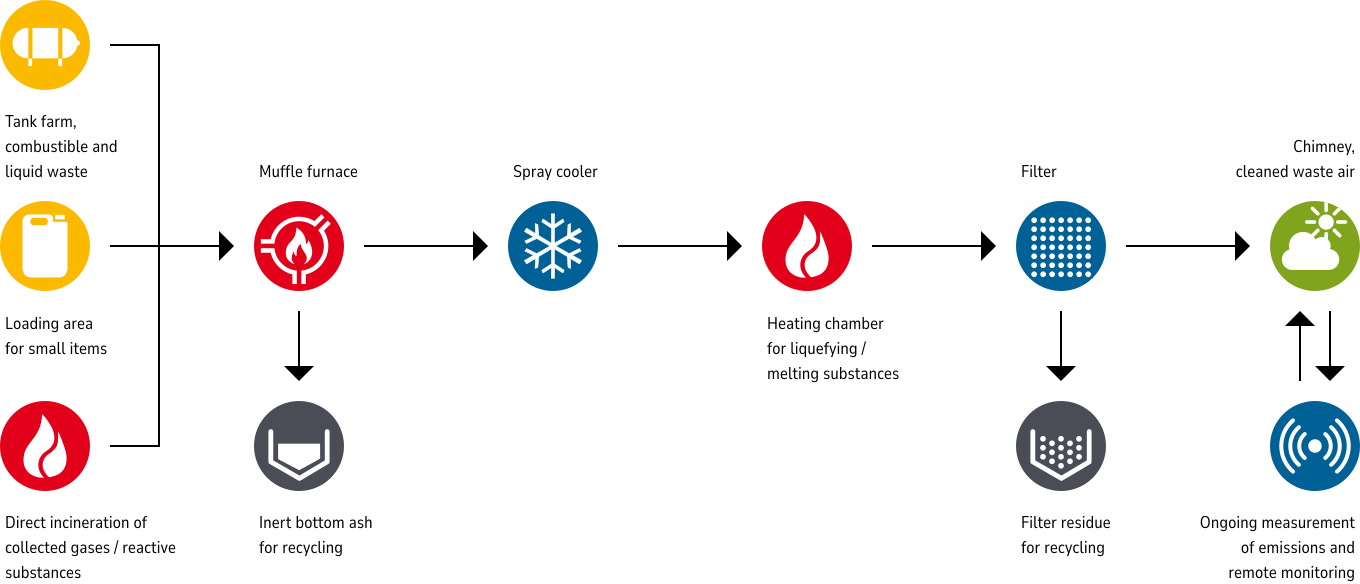
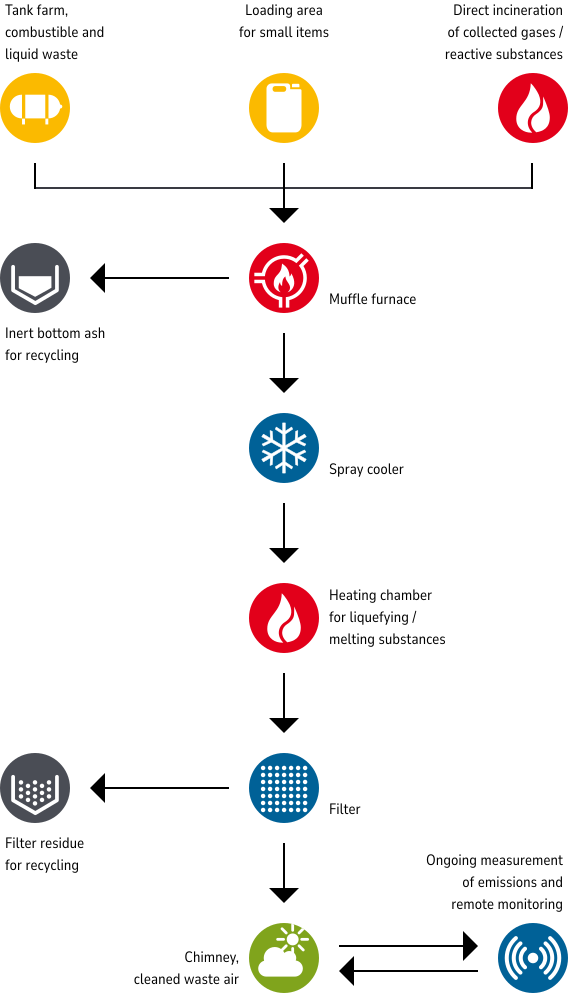
REMONDIS Industrie Service's high-temperature incineration facility (HTVA) is located in Bramsche. The hazardous waste is incinerated there in liquid, pumpable and gaseous form at over 1,100 degrees Celsius. Small quantities of solid waste such as phosphides, carbides and other reactive chemicals can also be thermally treated there. The facility operates at a technological level that ensures the complete conversion of hazardous substances and thus environmentally friendly disposal. The prescribed emission limits are strictly adhered to and even undercut. This allows us to offer the best possible utilisation in the context of material or thermal utilisation. So that they can be refilled, the corresponding containers are also fully emptied and cleaned in the factory's own washing system.

How the high-temperature incineration of hazardous waste works
Why we talk about thermal utilisation instead of waste incineration
In the recycling of hazardous waste, we speak of thermal utilisation within the circular economy and not of waste incineration or hazardous waste incineration. This is due to the fact that, even if most of this waste is not suitable for material recycling, it is not worthless. By utilising residual materials to generate energy, it is possible to replace fossil fuels such as oil, natural gas and coal and thus make a contribution to greater sustainability. The flue gas desulphurisation process also produces FGD gypsum, which is further processed within the REMONDIS Group to produce high-quality building materials. By using these building materials, resources can be conserved.